


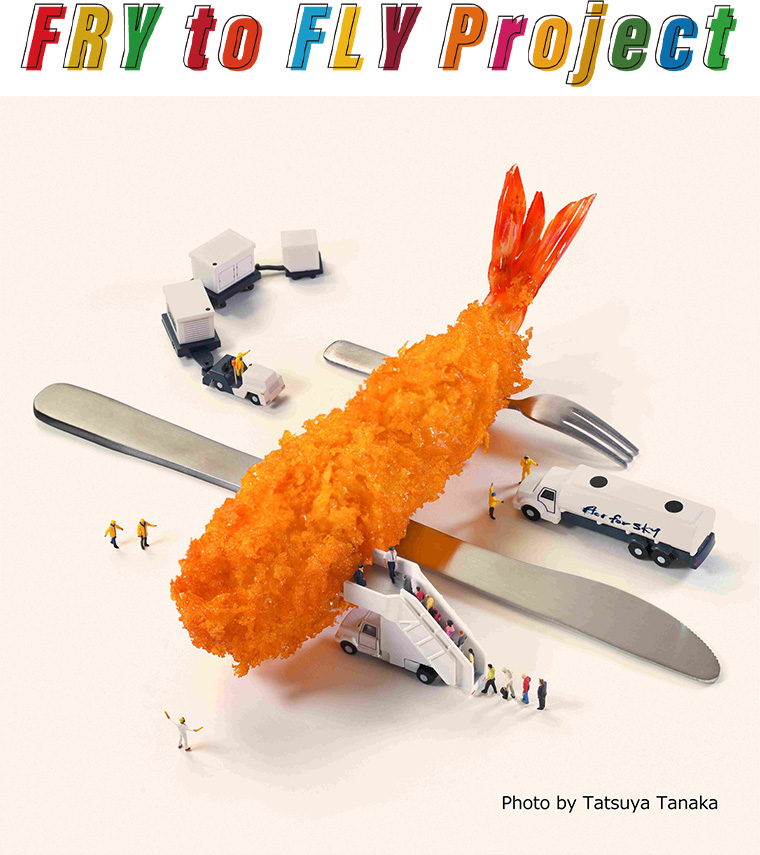
TOKYO, February 9, 2026 --- FUJIFILM Holdings Corporation today announced its participation in the “FRY to FLY Project,” a collaborative initiative that aims at creating a future where aircraft fly using Sustainable Aviation Fuel (SAF)*1 made from domestic resources, specifically waste cooking oil generated by households and businesses. In cooperation with cafeteria management companies, FUJIFILM Holdings collects used cooking oil from all employee cafeterias across the Fujifilm Group in Japan*2 and supplies it to the FRY to FLY Project to support the production of SAF.
Provided by JGC Holdings Corporation
FUJIFILM Holdings began supplying used cooking oil from the employee cafeteria at the Yokohama Minato Center of FUJIFILM Business Innovation in June 2024. As the initiative aligns strongly with the Fujifilm Group’s environmental priority issues – such as addressing climate change and promoting resource circulation - the company decided to formally participate in the FRY to FLY Project. Since then, FUJIFILM Holdings has expanded the number of participating sites and has now established a system that enables all employee cafeterias within the Fujifilm Group in Japan to support to the project.
Under its CSR plan, Sustainable Value Plan 2030, FUJIFILM Holdings remains committed to advancing initiatives that address climate change, promote circular resource use, and contribute to the broader transition toward a more sustainable society.
As of January 2026, 295 companies, municipalities, and organizations are participating in the initiative. SAF refers to sustainable aviation fuel that includes biojet fuel, produced using raw materials such as waste cooking oil, sugarcane, and other biomass resources, and municipal waste. SAF can be used without modification to aircraft or refueling infrastructure, and it can reduce CO2 emissions by about 60 to 80%*3 over its entire lifecycle from production to use.
- *1 SAF is a renewable or waste‑derived aviation fuel that meets the sustainability criteria defined by CORSIA (Carbon Offsetting and Reduction Scheme for International Aviation) under the International Civil Aviation Organization (ICAO).
- *2 Refers to 29 FUJIFILM Group employee cafeterias in Japan with in-house cooking facilities that generate used cooking oil.
- *3 Source: Japan’s Ministry of Land, Infrastructure, Transport and Tourism.
FUJIFILM Holdings Corporation
Corporate Communications Division Public Relations Group
- * Please note that the contents including the product availability, specification, prices and contacts in this website are current as of the date of the press announcement and may be subject to change without prior notice.